
Understanding these cabinet construction features will help you confidently explain quality differences to homeowners and recommend the cabinet line that best fits their needs and budget.
High-quality kitchen cabinets share a number of construction features that contribute to their durability, performance and craftsmanship. When evaluating a cabinet line, kitchen dealers should look for cabinets built with quality materials and assembled using proven construction methods.
Problems can begin to appear in lower-quality cabinets within just a few years. Crooked doors, sagging drawer bottoms, loose hinges, sticking drawer guides and even warped cabinet boxes can affect both the appearance and functionality of a client’s kitchen.
To help you compare cabinet lines more effectively, we’ve assembled a list of ten important construction and quality features to evaluate when assessing cabinet quality.
Ten Quality Construction Features
1. All Plywood Cabinets
Look for cabinets built with strong and long-lasting plywood. Plywood is the premium quality option for cabinets. Plywood holds screws more securely and resists moisture better than alternative materials, such as furniture board or particle board. Plywood resists dings, dents and sagging. As a result, it is the best material for cabinet sides, backs, shelves and drawer bottoms.
2. Fully Assembled Cabinets
Factory-assembled and ready-to-install cabinets are built as a single piece with no assembly required. Factory construction methods join wood parts using dovetail joints, hot and cold glue, heavy duty clamps and other industrial techniques. Most high-quality cabinets are built without using nails or staples. Pieces are cut to slide together. Other pieces are glued and clamped, forming a wood-to-wood bond that lasts a lifetime.
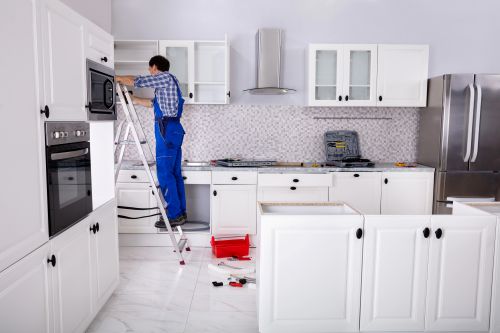
On the other hand, stock cabinets can be ready-to-assemble (RTA) cabinets that are cut, finished and shipped flat in parts and pieces. The cabinet, face frame, drawers, drawer guides, inserts, doors and hardware – all separate. They are designed to be assembled by you or your contractor at the construction site. RTA cabinets are assembled using metal clips or plastic parts, which are far less durable and inferior to wood construction. Assembly and installation requires some skill to ensure safe, functional cabinets.
3. Hardwood Cabinet Frames
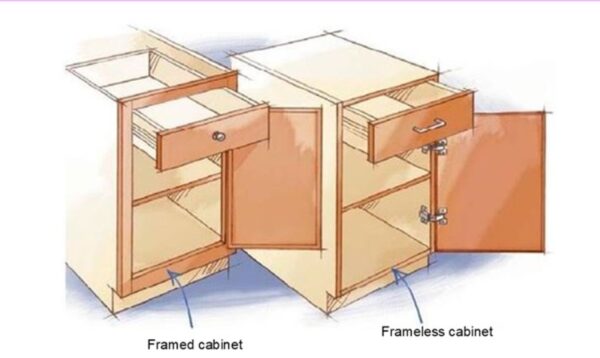
Long-lasting, quality constructed cabinet frames provide stability to the cabinet box. Face frames keep the cabinet square during shipping, installation and throughout the life of the cabinet.
Some things to know:
- Solid Hardwood Frames. A well-made, quality cabinet box is built using 3/4″ thick by 1-1/2” wide solid hardwood frames. Solid hardwood provides strength, durability and longevity to the cabinet. It holds the cabinet square, it supports heavy countertops and it provides the color, wood grain and texture that gives cabinets their unique appearance.
- Frameless cabinets, also known as European-style cabinets, have no frame on the front of the cabinet box. As a result, the only style available is full overlay. The reveal or area between doors and drawers is approximately 1/8-inch around drawer fronts and cabinet doors. Side panels are thicker than in a framed cabinet because the guides and hinges mount directly to the cabinet sides.
Be aware that some cabinet manufacturers charge more for frameless cabinets because they require specialized equipment to build. And cabinet installers often charge more to install frameless cabinets, because frameless cabinets require very precise installation. The area where they will be installed must be perfectly level. This is especially important in certain spaces, such as in older homes, where the floor and walls may be uneven.
4. Base Cabinet Box Construction
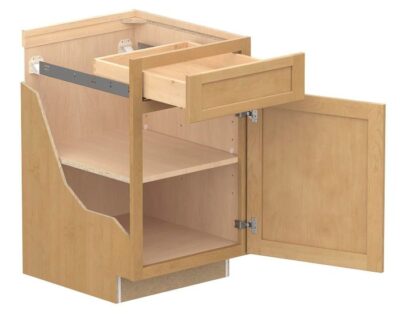
The method used to assemble base cabinets is an important feature to be aware of. Different manufacturers use different methods and call their method by different names. “Integrated brace construction” refers to the material and method that stabilizes the base cabinet, keeps it square and creates a quality cabinet box. It increases stability during shipping and installation and provides long-term cabinet strength.
Note: Wall cabinets do not need this support because they are enclosed on top and bottom.
Some materials and methods used include the following, listed from least desirable to most desirable:
- Plastic Corner Gussets. Some cabinets brands use plastic triangular shaped corner gussets as a lower cost alternative to integrated braces or I-beams. Gussets are usually stapled, glued or nailed to each corner of the cabinet to keep the cabinet square during shipping. However, plastic gussets do not provide the same stability and strength offered by integrated braces. Unless they are integrated with the cabinet side, gussets add no strength or structural integrity to the cabinet.
- Furniture Board Braces. Integrated furniture board braces are part of the box. They are connected to all four sides of a base cabinet using dado joints, nails and/or glue. This integrated construction method provides strength and stability during shipping and installation.
- Plywood I-beams. Fully integrated I-beams create a very sturdy box. I-beams add stability during shipping and installation and provide long-term cabinet strength. They also make installation of base cabinets faster and easier.
- Full Dust Covers. High-end custom base cabinets are built with full dust covers to provide the best possible cabinet stability. The dust covers also keep – you guessed it – dust out of top drawers and other cabinet contents. They also stop ladles and spatulas from getting stuck and preventing the drawer from opening.
5. Easy-to-Clean Interiors
Kitchen cabinet interior surfaces should offer an easy-to-clean surface. Cabinet interiors also need to be tough enough to last the life of the cabinets without staining, bubbling or showing wear.
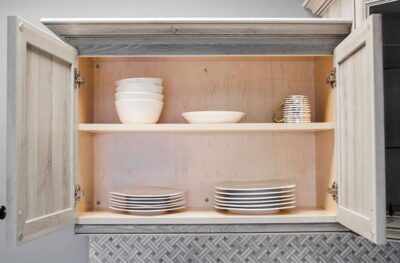
- Wood Veneer Interior. In a high-end cabinet line, stained wood veneer interiors and shelves will be sealed and varnished. Without this protective coating, the finish will not tolerate cleaning solutions.
- Melamine and Laminate Interiors. This is the most common cabinet interior finish. Melamine and laminate interiors are durable and resistant to water and stains. They can be safely cleaned with household solutions.
6. Full Height Back Panel
For strength and cabinet stability, quality well-made kitchen cabinets have a full-height 3/8” plywood back panel. This panel allows the cabinet to be attached directly to wall studs. If installation requires the cabinet to be cut around ductwork, plumbing or electrical, the modification is easy. The back is secured with hot glue and a rabbet joint.
- Alternate Cabinet Back. 1/2-inch or 3/4-inch hang rails at the top and bottom of the cabinet can be an alternate cabinet back. Manufacturers then either omit the back panel entirely or use a thin 1/8-inch to 1/4-inch panel. If installation requires a cut to accommodate wiring or plumbing, additional reinforcement will be necessary.
7. Dovetail Drawer Box
Stapled Particleboard Drawer Box. A wide range of materials and construction methods are used for drawers. Construction methods vary greatly and could include particleboard, plywood, metal or plastic elements. Lesser quality cabinets have stapled particleboard drawer boxes.
8. Soft-Close Door Hinges
Any cabinets you may consider selling should have soft-close door hinges. Further, the hinges should have KCMA Certification, which means they have been tested to withstand 65 pounds of weight and operated through 25,000 open and close cycles.
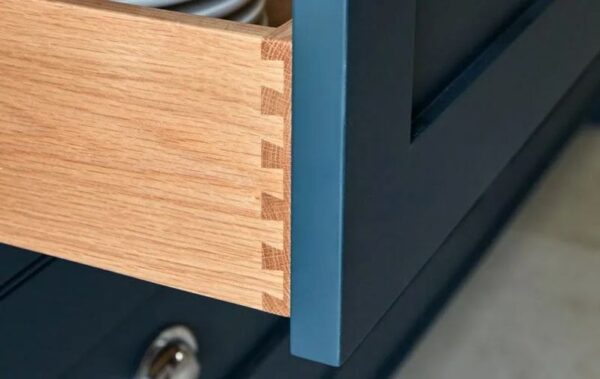
Solid hardwood drawer boxes with dovetail joints have become the standard for American cabinets, thanks to the long-lasting strength, durability and beauty of the dovetail joint. Well-made drawer boxes are constructed from solid hardwood with dovetail joint. A dovetail joint has teeth that interlock to join two pieces of wood. A high-quality hardwood drawer box will have sides 5/8” or thicker. A strong 1/4″ plywood drawer bottom is glued and nailed in place. Or ploughed into the drawer box sides.
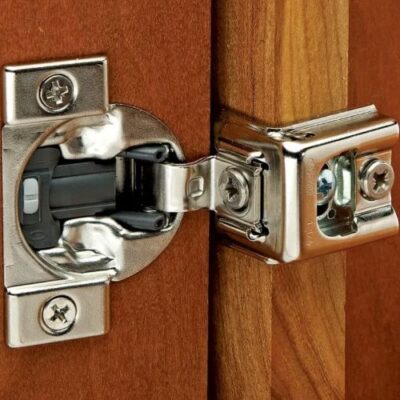
Blum Soft-Close Hinges. The standard by which all other hinges are judged is Blum® soft-close hinges. They are 6-way adjustable, concealed, nickel plated steel, with a 107-degree opening and a lifetime warranty.
Not all cabinet lines use the Blum soft-close hinge, and that’s ok. There are many variations of this hinge on the market and most are a fine substitute. Just look for the KCMA Certification to make sure the soft-close hinges on the cabinets you choose will last as long as the cabinets.
Other Hinges. There are thousands of hinges available to cabinet manufacturers. Be wary of cabinet manufacturers that use low-end hinges. Many hinges only provide four-way adjustability or do not have a product warranty. They will jam or sag or fail in some other undesirable way.
9. Soft-Close Drawer Guides
You may see them called different names: drawer glides or drawer slides or drawer guides. Whatever they are called, make sure they are undermount, full access and soft-close.
- Side-Mount Epoxy Coated Guides. Lower quality stock cabinet brands use many different types of drawer guides, including epoxy-coated metal with nylon rollers. Side-mount guides don’t provide full access. Without full access guides, about 25 percent of the drawer remains inside the cabinet when it’s pulled open. This makes it difficult to reach the back of the drawer. Plus, side-mount guides are never soft-close.
- Blum® Full-Access, Soft-Close Undermount Guides. Again, like the soft-close door hinges, the Blum® full-access, soft-close steel undermount guides have become the industry standard. The ball-bearing guide is concealed under the drawer box and is rated to support up to 100 lbs. That’s a lot of spatulas. In addition to providing full access to the drawer contents, it uses a dampening system that is almost silent when opening and closing your drawer.
10. The Cabinet Toekick
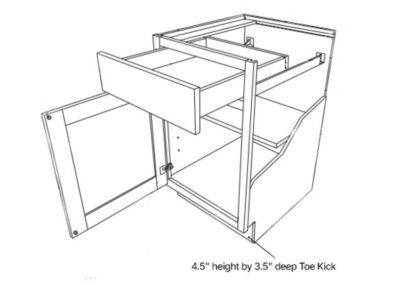
The toekick (or toe space) area is where the cabinet meets the floor. The purpose of a toekick is to create a recess for your client’s feet, so you can stand closer to the sink or countertop. A toekick should be fully enclosed and integrated into the back panel and cabinet sides. Cabinet orders are shipped with a matching piece of toe board or toekick molding that gets installed in the unfinished recess after the cabinets are installed. This final touch provides a continuous finished look to the cabinet run that your clients will love.
Conclusion
Choosing a cabinet manufacturer involves much more than comparing door styles and finish colors. Construction details such as cabinet box materials, drawer construction, hardware quality and assembly methods all affect how cabinets perform over time.
Understanding these features will help you evaluate cabinet lines more effectively, answer homeowner questions with confidence and recommend products that deliver lasting value.
If you’re considering adding a new cabinet line, I can help you compare construction methods, pricing, customization options and dealer support programs to determine which manufacturer best fits your business. Get in touch with me here.
Frequently Asked Questions About Cabinet Construction Features
Q. Does plywood construction really matter?
A. Plywood is the best material for cabinet sides, backs, shelves and drawer bottoms. It’s strong and durable. It holds screws securely and resists moisture better than furniture board or particle board. It resists dings and dents and won’t sag.
Q. Are frameless cabinets better than framed cabinets?
A. Frameless and framed cabinets have different advantages. Frameless cabinets create a sleeker tighter look when compared to framed cabinets. However, framed cabinets are more durable and keep cabinets square. Doors and drawers are held in place by screws attached to 1 1/12″ solid wood stiles and rails. In frameless construction, screws are screwed into plywood or particle board.
Q. What drawer guides are best?
A. Full-access, soft-close undermount guides are the industry standard. The ball-bearing guides are concealed under the drawer box and are rated to support up to 100 lbs. Further, when installed, they providing full access to the drawer contents.
Q. Why is dovetail drawer construction important?
A. Dovetail joints provide long-lasting strength, durability and even beauty. Well-made drawer boxes are constructed with solid hardwood sides, held together with a dovetail joint’s teeth that interlock to join the sides together.