
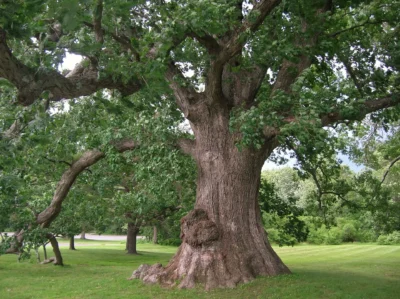
How do you help a client decide between Red Oak and White Oak? What are the differences between White Oak and Red Oak? Do these differences matter when choosing wood for kitchen cabinets?
Red and White Oak
There are roughly 600 species of oak trees worldwide and in that number there are two basic types of domestic oak: Red Oak (Quercus rubra) and White Oak (Quercus alba).
If someone refers to a wood type as “oak,” they are typically referring to Red Oak, the most commonly used oak type in America.
Kitchen designers choose Red Oak for its exceptional durability, budget-friendly hardwood cost and prominent open grain pattern that accepts stain beautifully.
White Oak is popular right now in the kitchen design world. Its refined grain feels both timeless and modern and Its neutral tone blends with any design – modern, transitional or traditional.
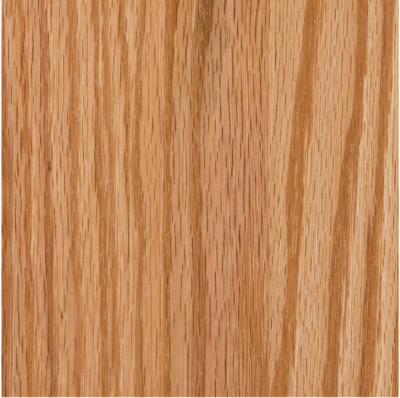
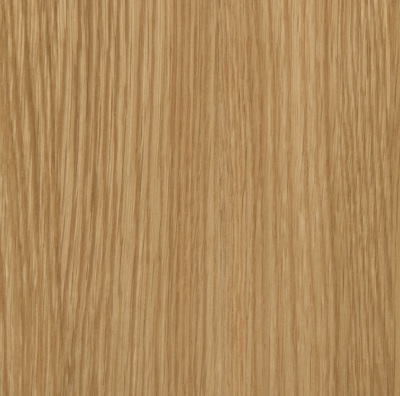
The Differences between Red and White Oak
The differences between Red and White Oak can be summarized in the following categories:
- Grain Pattern
Although both woods are oak, their grain tells two completely different stories, and this is probably the biggest distinction between Red and White Oak.
White Oak
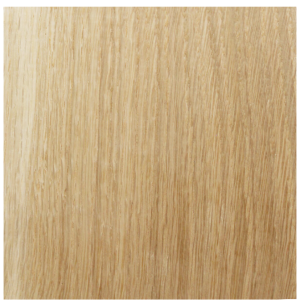
- Subtle grain – a tighter, smoother, more straight grain pattern than Red Oak
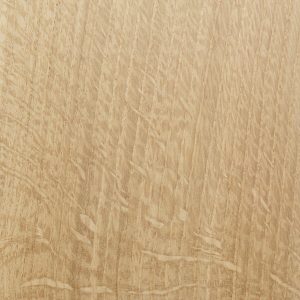
- Longer, more prominent ray flecks—especially when quarter-sawn
- Refined appearance. Contemporary look
- Beautiful in rift-sawn and quarter-sawn cuts
Red Oak
- Pronounced cathedral grain
- Adds movement and character
- Feels warmer and more traditional
- Shows a dramatic, wave-like grain pattern, commonly associated with oak.

- Stain Acceptance
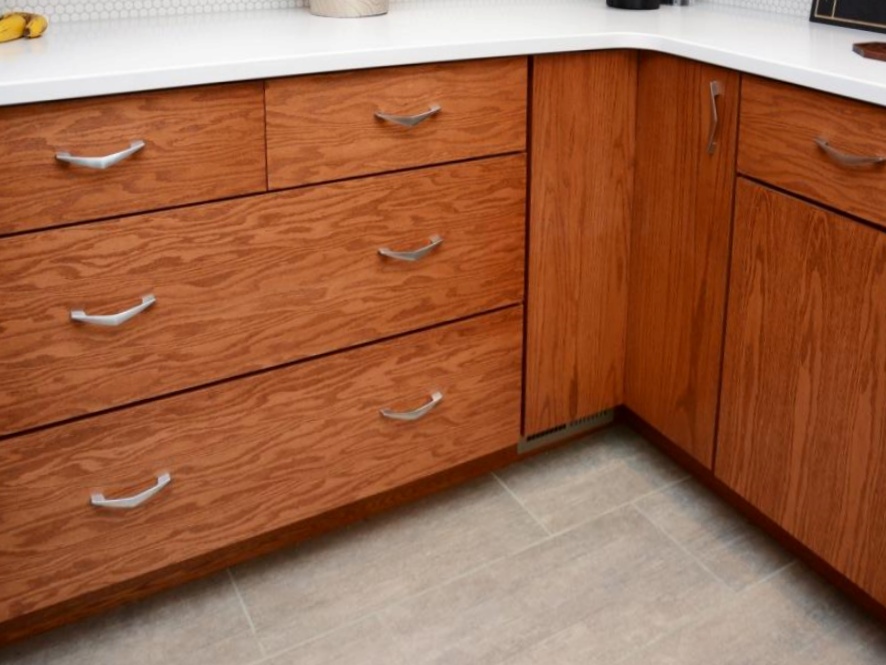
Red Oak has wide, open pores that deeply absorb stains.
White Oak contains compounds called tyloses that make it accept stain differently. White Oak has closed pores packed with those tyloses, making it naturally water-resistant. Thus the reason why White Oak is in demand for the Bourbon industry – they keep the whiskey in the barrel.
White Oak’s neutral wood does take light, medium and dark stains uniformly.
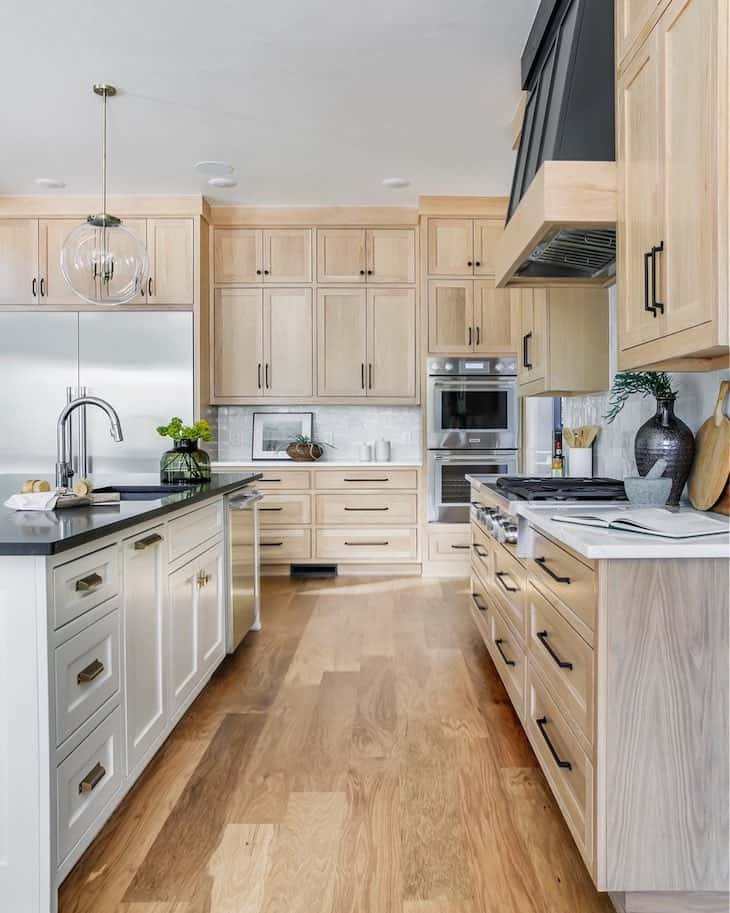
- Color
Red Oak and White Oak have distinct color profiles.
Red Oak heartwood features pinkish-brown hues, plus warm pink, red or salmon undertones that can influence the final finish color. Light stains make the natural pink and red tones pop even more.
And that’s why designers sometimes struggle to achieve the popular pale Scandinavian-inspired look on Red Oak.
White Oak tends to have a more uniform, neutral tawny-brown or “dirty blonde” color, making it the preferred choice for modern light-toned stains. Unlike Red Oak, White Oak has no pink hues.
- Durability
Both woods are hard—but White Oak is slightly harder (rating 1,360 on the Janka scale) than Red Oak (rating 1,290). They are way stronger and less likely to dent than softer woods like Maple or Cherry.
Both Red and White Oak are extremely strong and well suited for kitchen wear and tear. Most homeowners would never notice any difference between the two. They are the tough foundation your client’s kitchen needs to look great forever.
To get way down into the nitty-gritty details, Red Oak may actually hide wear better. Because its grain is busier scratches blend in, dents disappear more easily and everyday wear becomes less noticeable,
White Oak’s grain can make damage stand out a bit more, especially with natural finishes.
- Price.
White Oak costs more than Red Oak because it’s rarer and harder to work with. Fewer trees are harvested and competition from industries like barrel-making drives up its value. Premium cuts like quarter-sawn or rift-sawn White Oak require precise milling that increases waste and raises the price.
White Oak typically costs 30% to 50% more due to higher demand, slower growth rates and superior water resistance.
Red Oak offers excellent value
- It grows faster than White Oak
- Is more abundant across North America
- Provides strength and durability similar to White Oak
- Delivers hardwood look without sacrificing performance
The Elephant in the Room: Red Oak's Bad Finish Color Reputation
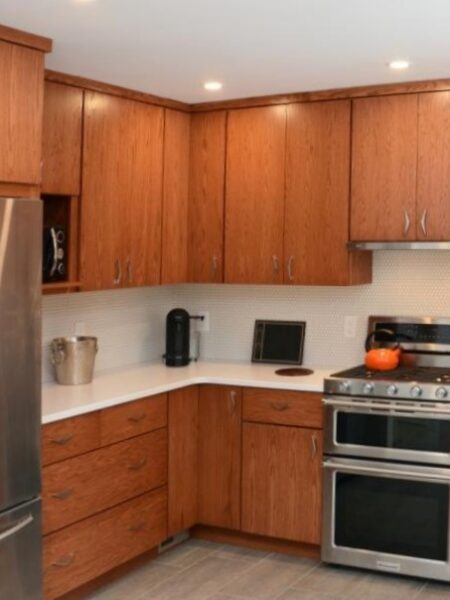
Red Oak has gotten an unfair and regrettable reputation because of the orange finishes that dominated kitchens in the 1980s and 1990s.
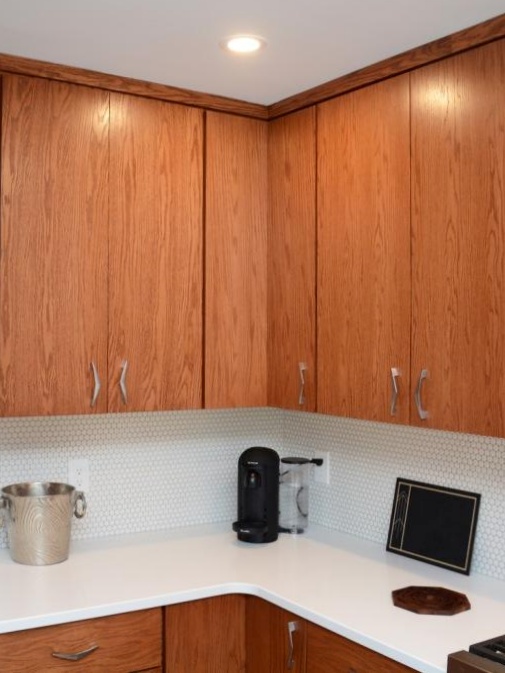
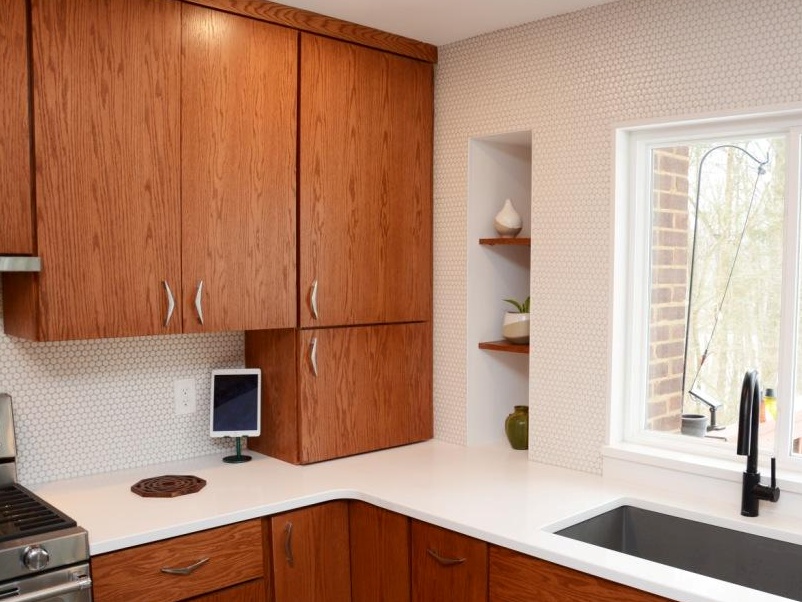
Today’s finishes for Red Oak are much more in keeping with trends and consumer demands. Modern stains can neutralize the natural red undertones for a contemporary feel.
Honey and amber stains accentuate the warm golden and reddish glow of Red Oak.
Medium to dark stains, like espresso, deepen the color.
Here’s a modern Red Oak kitchen from Brighton Cabinetry’s Project Gallery that shows how today’s stains let Red Oak shine.
White Oak has Become the Luxury Standard
White Oak has become the luxury standard, thanks to its association with custom homes, European design and boutique hotel interiors.
Many homeowners simply ask for White Oak because that’s what they’re seeing on Pinterest and Instagram.
Designers know they’re often buying a look as much as a species.
Then there’s rift-cut and Quarter-sawn White Oak – they’re in a class by themselves.
Quarter-sawn White Oak (QSWO) is admired for its distinctive grain pattern, which became very popular with Arts and Crafts and Mission-style furniture.
Rift-cut White Oak, one of the most requested woods in custom cabinetry, is prized for its extremely straight grain that shows very little cathedral pattern. Its consistent grain looks terrific in a cabinet run.
Quick Recommendation
Choose White Oak if you want:
- today’s light, natural look
- quiet grain pattern
- excellent moisture resistance
Choose Red Oak if you want:
- lower cost
- bold grain pattenr
- painted finish with visible texture
Red Oak vs White Oak
Feature
PRICE
AVAILABILITY
GRAIN
DURABILITY
STAIN ACCEPTANCE
COLOR
BEST FOR
Red Oak
Lower than White Oak
Readily available
Bold
Resists dents & scratches
Accepts stain beautifully
Warm/pink undertones
Character and value
White Oak
Costly
Subtle
Shows minor damage
Accepts stain well
Cool brown
Contemporary luxury
Conclusion
Neither wood is universally better: both White Oak and Red Oak have earned their place in fine cabinetry. The best choice depends on the design vision, desired finish, budget, how the cabinets will will be used and the character you want the wood itself to bring to the kitchen.
Continue Reading About Red and White Oak
Frequently Asked Questions About Oak - Red and White
Q. Why is white oak a favorite of kitchen designers?
A. White oak is a natural choice for modern contemporary design trends.
Q. Is red oak better than white oak?
A. Both have their advantages. Red oak is less expensive and more readily available. White oak is in demand for its subtle color and elegant grain pattern.
Q. How do red oak and white oak compare to maple and cherry for kitchen cabinets?
A. Both red and white oak are much stronger and harder to dent than maple and cherry.
Brighton Cabinetry and Integrity Cabinets both offer White Oak and Red Oak as standard woods.