
As a kitchen designer you have many responsibilities toward your clients. Not the least of which is setting customer expectations for what their finished cabinets will look like. You know this. And you probably think you do this. You explain and show and educate — all the things you’re supposed to do before they sign off on the design and the order is placed.
Educate Your Customers
If you’ve been in the cabinet business as long as I have, you probably think you’ve “seen it all”. A recent issue with a homeowner has made me think that maybe I had not seen it all before. He was NOT HAPPY with the Cherry cabinets installed in his home.
It seems the designer he worked with failed to explain properly what Cherry wood actually looks like and that the finish he chose – a translucent paint – would actually cause Cherry’s character marks to darken and show prominently.
Here’s my message:
Explain every little detail to them. Show them photos of finished jobs. Display examples that demonstrate what Cherry actually looks like. Present them with examples of Cherry with different finishes.
It seems elementary, but problems come up continuously.
Cherry
Individual characteristics are part of the beauty of Cherry wood cabinets. These naturally occurring variations create a unique charm that makes the cabinets one-of-a-kind. Each piece of wood has its own distinctive traits. The type of soil the tree was grown in, the weather, even the amount of moisture and sunlight have effects on grain and color variations.
No two Cherry trees are exactly alike. Hardwoods like Cherry and its hardwood veneers will vary in grain patterns, color and the amount of naturally occurring mineral streaks, knots, pitch or gum pockets, pith flecks or worm tracks. These variations mean each piece of wood is unique and the homeowner’s cabinets will be one-of-a-kind.
These traits are found in the wood’s natural state and are therefore acknowledged as the beauty of wood and are not considered a manufacturing defect and are not reasons for product replacement.
Let’s look at each of the naturally occurring characteristics of Cherry that can be seen as “defects” by an unsuspecting consumer who is expecting “perfection” from a product of nature.
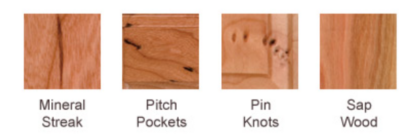
- Mineral Streaks.
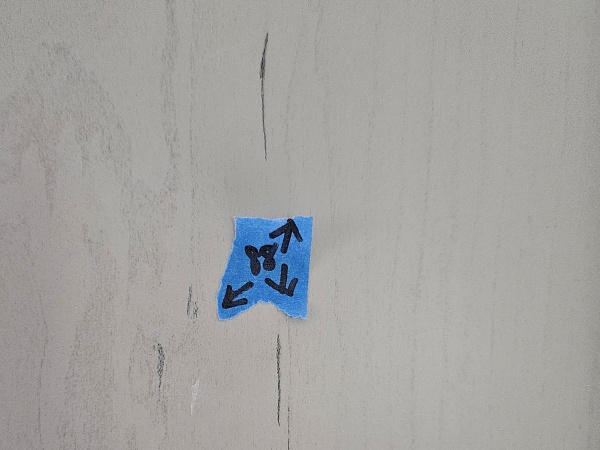
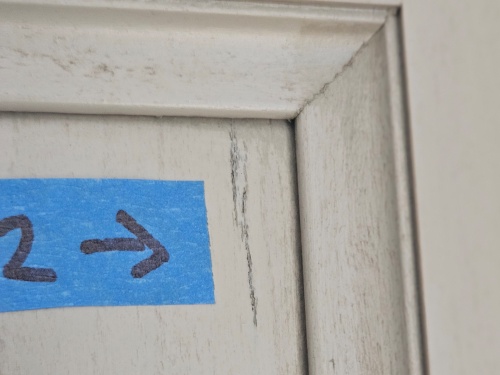
Mineral streaks in cherry wood are narrow, random dark brown or black bands that run parallel to the wood grain. They form when a living tree absorbs minerals and nutrients from the soil it grows in. Mineral streaks are not a defect: They are a natural characteristic of genuine hardwood, not a sign of rot, decay or structural weakness.
Mineral streaks tend to become more noticeable and darken further when a stain is applied. People who appreciate the beauty of Cherry view them as unique marks of authenticity, not as flaws.
- Pitch Or Gum Pockets
Gum pockets in Cherry wood are caused by insects that have bored into the bark. The pockets appear as the wood heals the damage with sap and resin. By the time the wood is milled, the insects are long gone and there is no harm to the structure of the wood.
Pitch pockets are dark streaks or resin deposits formed by hardened sap. They typically appear as small black or dark brown streaks, spots or pits that run along the growth rings or grain of the wood.
Small gum pockets are considered as natural character marks that prove the wood’s authenticity. People who appreciate the beauty of Cherry appreciate them for the unique rustic appeal they give to finished cabinets.
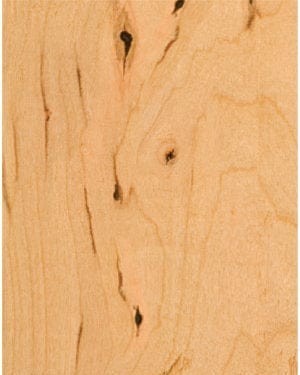
- Pith Flecks \ Worm Tracks
Pith flecks in Cherry wood are small, narrow brownish streaks caused by insect larvae that tunnel through the tree. The tree will heal these tiny tunnels by filling them with scar tissue, which shows up as streaks after the lumber is milled. They look like tiny, random brown dashes, streaks, or “worm tracks” running along the grain of the wood.
As with other characteristics of Cherry, they are considered a natural trait of the wood, rather than a defect. Along with mineral streaks, pin knots and gum pockets, pith flecks contribute to the unique, rustic, and authentic look of natural cherry.
- Knots
Cherry is noted for pin Knots: very small, dark spots, often under 1/4 inch. Natural knots in Cherry wood are caused by the tree’s growth around its branches. As a cherry tree grows, the main trunk expands and grows around the side branches. The wood grain moves around these limbs and leaves behind the dark, dense circular patterns known as knots when the log is milled. These characteristics are considered the natural beauty of the wood and are not considered a defect or a cause for replacement.
To someone who understands natural wood, these are characteristics. To a homeowner who was expecting an evenly colored, flawless surface, they can look like defects. That difference in perception needs to be addressed before the cabinets are ordered.
How Is Cherry Selected by the Cabinet Maker?
Cabinet makers select Cherry wood based on how uniform the color is and how many natural characteristics – like knots, pitch pockets and mineral streaks – are allowed. Natural / Standard Grade is the most common grade.
Select / Premium Grade. This grade features mineral color variation, very little sapwood and smooth consistent matching across cabinets doors. It allows only a few tiny pin knots and faint pitch marks.
Natural / Standard Grade. This is the most common grade used for cabinetry. It includes the natural traits of the wood, showing moderate color variations between boards, random pitch pockets, gum streaks and small pin knots.
There is also Rustic Grade. For Cherry it’s called Character.
Designer Responsibility
It is the salesperson’s responsibility to thoroughly explain to the customer the variations that exist with a species. These variations will become more apparent in lighter or translucent stain colors.
Standard doors may reflect all or some of each species’ natural wood characteristics. These can include mineral streaks or deposits, sap marks, small knots, pin holes and worm holes.
The cabinet manufacturer won’t be held responsible for misunderstanding of natural, light or translucent stained finishes or the variations that occur naturally within Cherry wood.
For your own protection, you as the dealer should get a disclaimer signed by your customer.
There was a time when signed acknowledgments about natural wood characteristics and finish variations were standard practice for many cabinet dealers and manufacturers. Given the potential for misunderstandings, it may be time to bring them back.
Color samples can only represent an overall general guide to the appearance of the finished product. Small displays and wood samples may not be a true representation of a complete kitchen. Two doors side by side in the finished kitchen may contrast in appearance; this is to be expected. The wood used in the same door may have a contrasting appearance in the panel or even from rail to rail.
Don’t Let This Happen To You
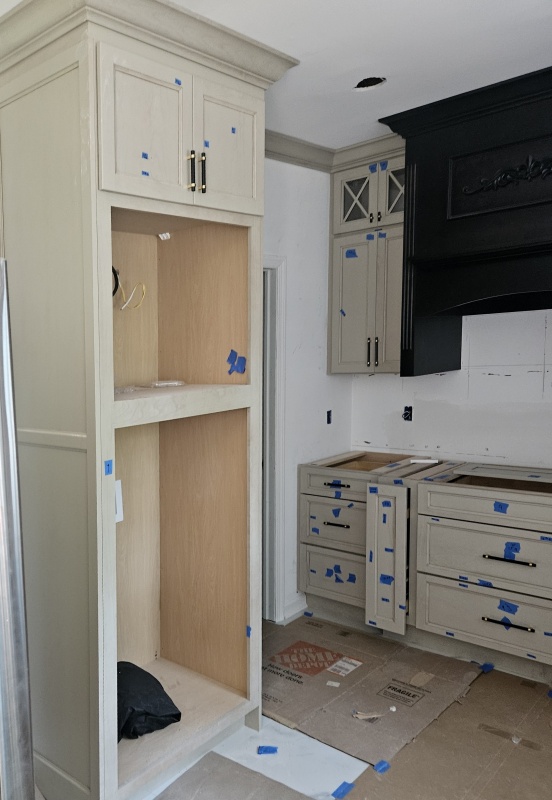
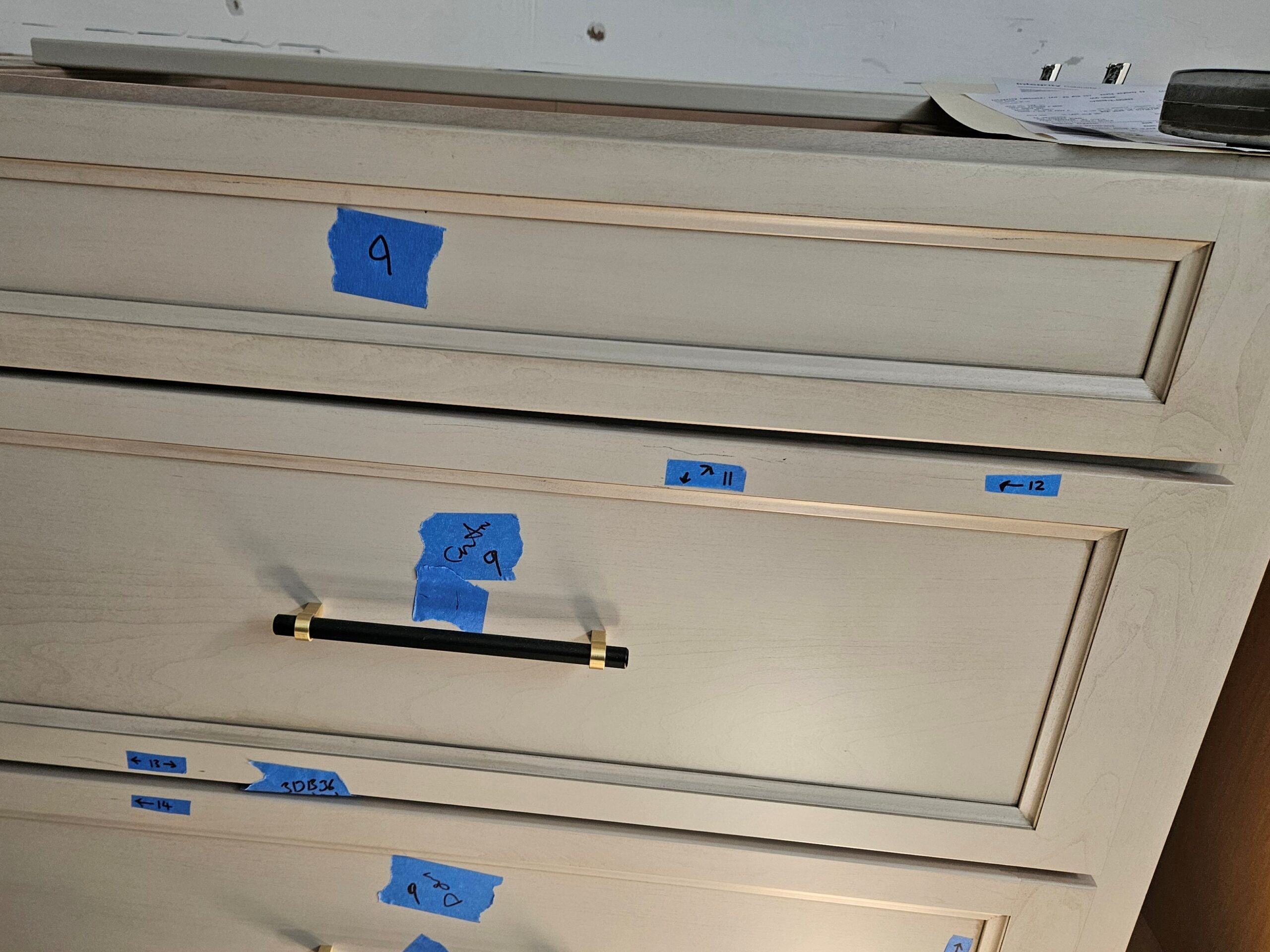
The cabinets shown here are made from genuine Cherry hardwood, with the natural color, grain and character variations inherent to the species. Different manufacturers and wood grades may allow different degrees of variation, but these characteristics are not manufacturing defects.
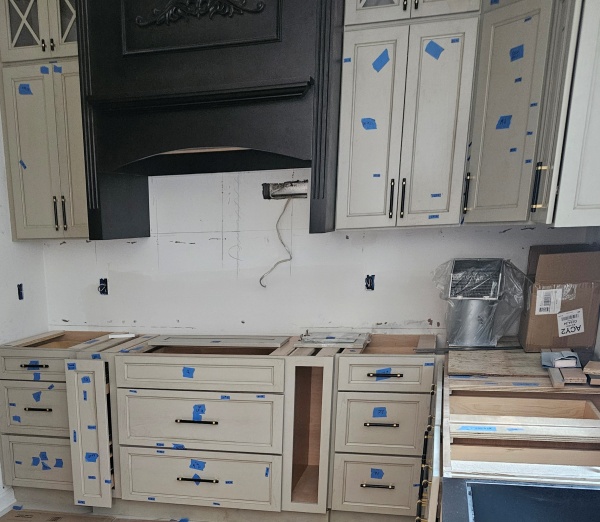
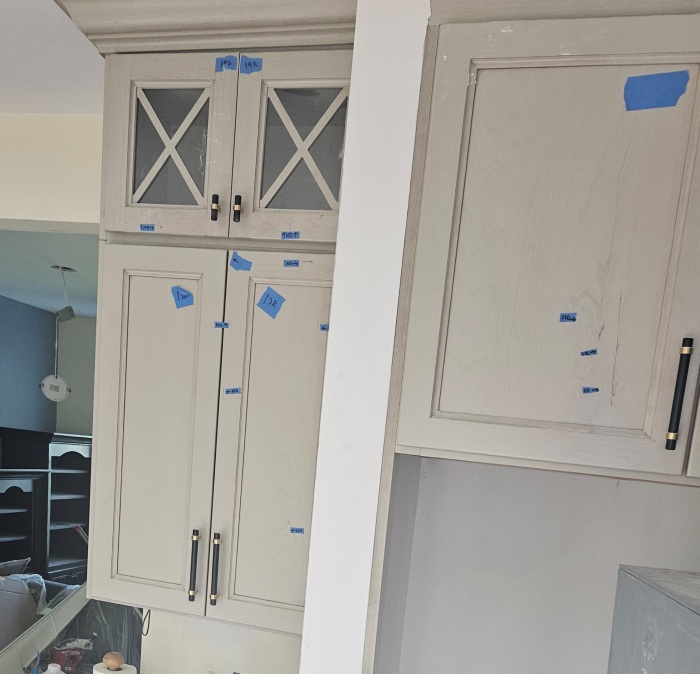
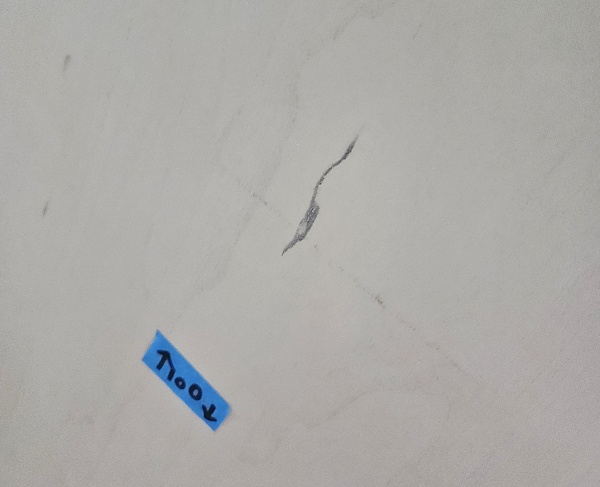
This kitchen features mid-priced American-made cabinets. There were 140+ pieces(!) of numbered blue tape highlighting the “flaws” the homeowner saw in the Cherry. We are showing ones that illustrate areas characteristic of Cherry.
The Finish Changes What The Customer Will See
We should note that the finish is a translucent paint that contributes to the grain and character marks standing out and showing more prominently. This is another area where homeowners can be educated: the finish can accentuate characteristics already present in the wood. And this statement does not apply to Cherry only. Maple and White Oak are prime examples.
LINK TO OTHER WOODS
Conclusion
A door sample can’t predict exactly what an entire kitchen of natural wood will look like.
Show customers completed kitchens. Show them variation. Show them character marks. Explain how the chosen finish will interact with the wood. And document that conversation before the order is placed.
A few extra minutes spent educating a customer and setting their expectations at the beginning of the project can prevent a very difficult conversation at the end.
At Bob Aungst Cabinet Sales, we work with kitchen dealers and designers and design-build remodelers throughout Pennsylvania, New Jersey, Delaware and Maryland to help them plan cabinetry for real homes and real lifestyles.